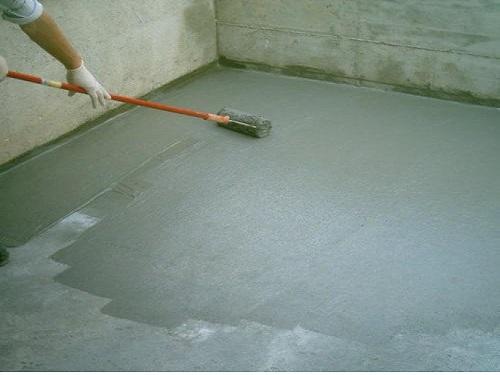
Cementitious waterproofing is one of the most widely used and cost-effective methods for protecting concrete surfaces from water penetration. It involves applying a cement-based coating mixed with special waterproofing additives to create a rigid, durable barrier against moisture.
This system is especially popular because it is easy to apply—typically using a brush or trowel—and bonds strongly with concrete surfaces. Once cured, it forms a solid layer that prevents water seepage while maintaining structural integrity.
Where it’s commonly used:
- Bathrooms and wet areas
- Basements and foundations
- Water tanks and reservoirs
- Swimming pools
- Roof slabs (as a base layer)
Key benefits:
- Strong adhesion to concrete and masonry
- Durable and long-lasting
- Non-toxic and safe for potable water tanks
- Low maintenance and cost-effective
- Simple application process
While cementitious waterproofing is highly effective, it is less flexible compared to other systems, so it may not be ideal for surfaces prone to movement or cracking. In such cases, it’s often combined with flexible waterproofing solutions for better performance.
Overall, it’s a reliable choice for internal waterproofing needs where durability and ease of use are top priorities.